A freight company in Nizhny Novgorod. Its daily work is where the problems we still solve come from.
October 2022
The first system
A panel for TK-IRSA’s dispatchers. We started simple: a driver gets a WhatsApp notice the moment a job is assigned to them.
December 2022
Orders without retyping
OOO IRSA is registered. Orders from shippers’ tender portals arrive in the system on their own and go straight out to ATI.SU.
2023
Integrations
Fuel cards and address checks are connected, and a new interface ships. We publish the fuel card library as open source.
2024
Scale
More shipper portals are connected, and trip accounting is added.
2025
From a panel to products
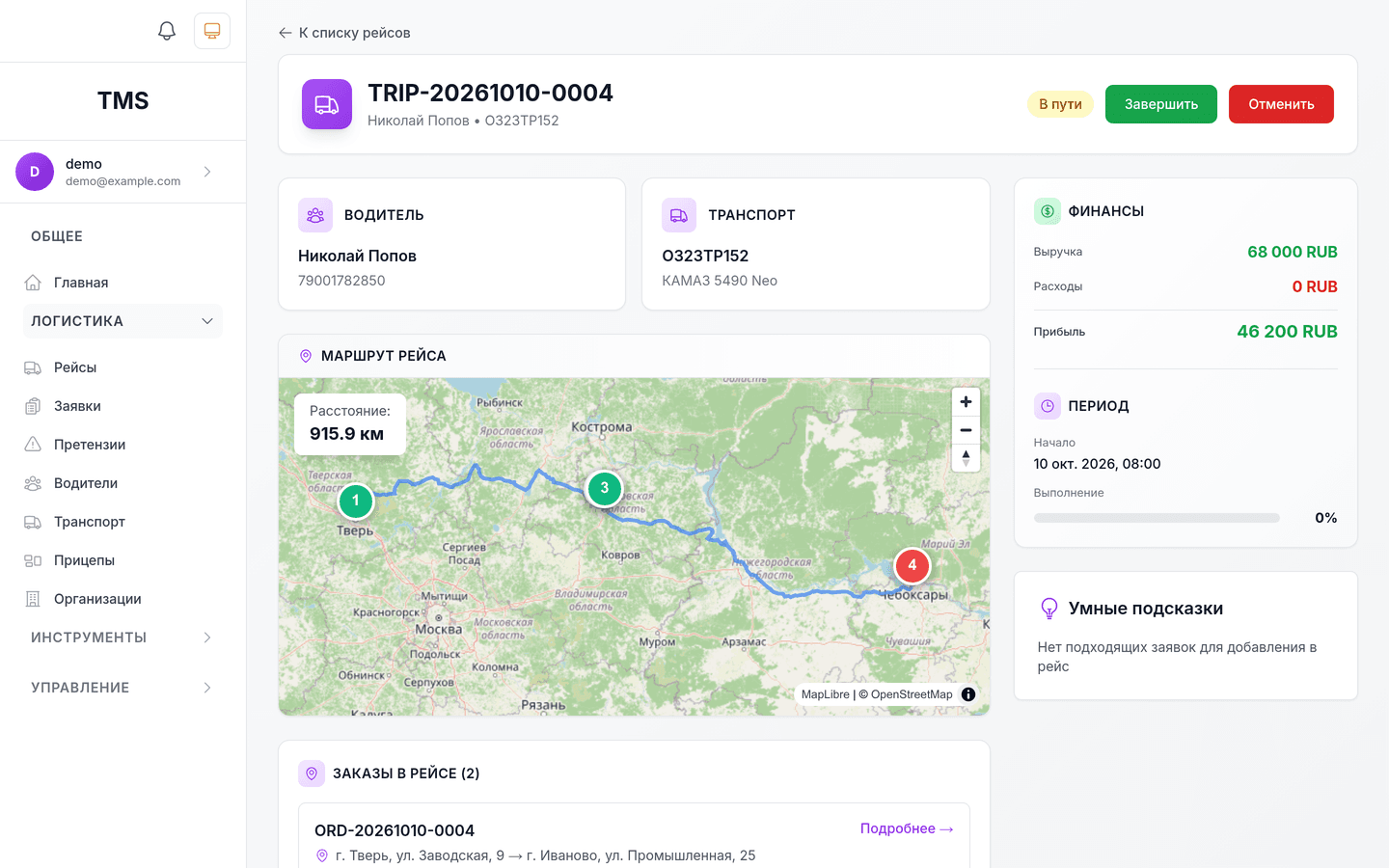
A cost calculator, Telegram apps for carriers, carrier work on ATI.SU. We launch irsa.digital and start designing id.TMS.
Spring 2026
A full TMS
Telephony, analytics and a logistics centre. The security team gets counterparty checks and document recognition, and loads from messenger chats are parsed automatically.
2026
Two countries
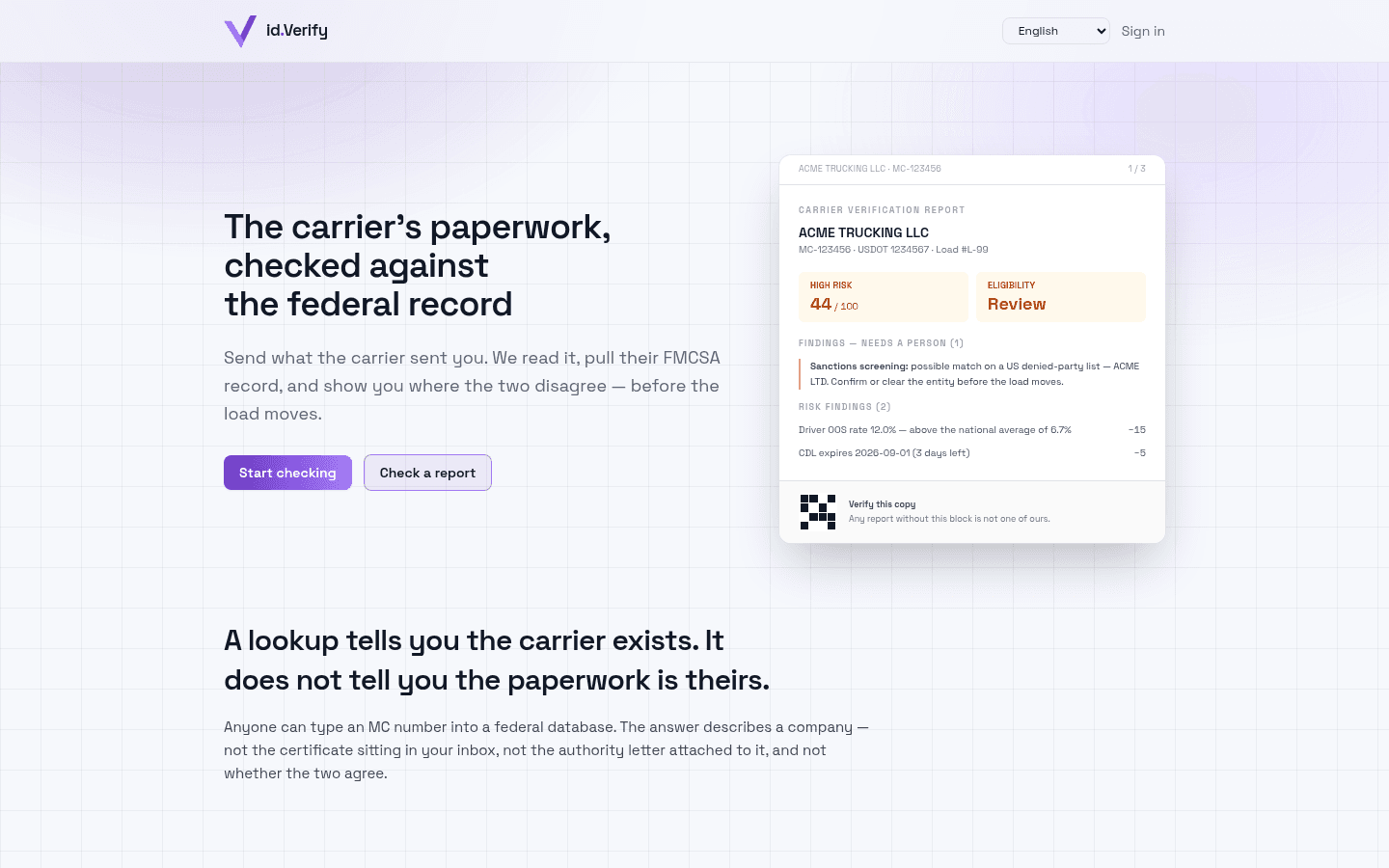
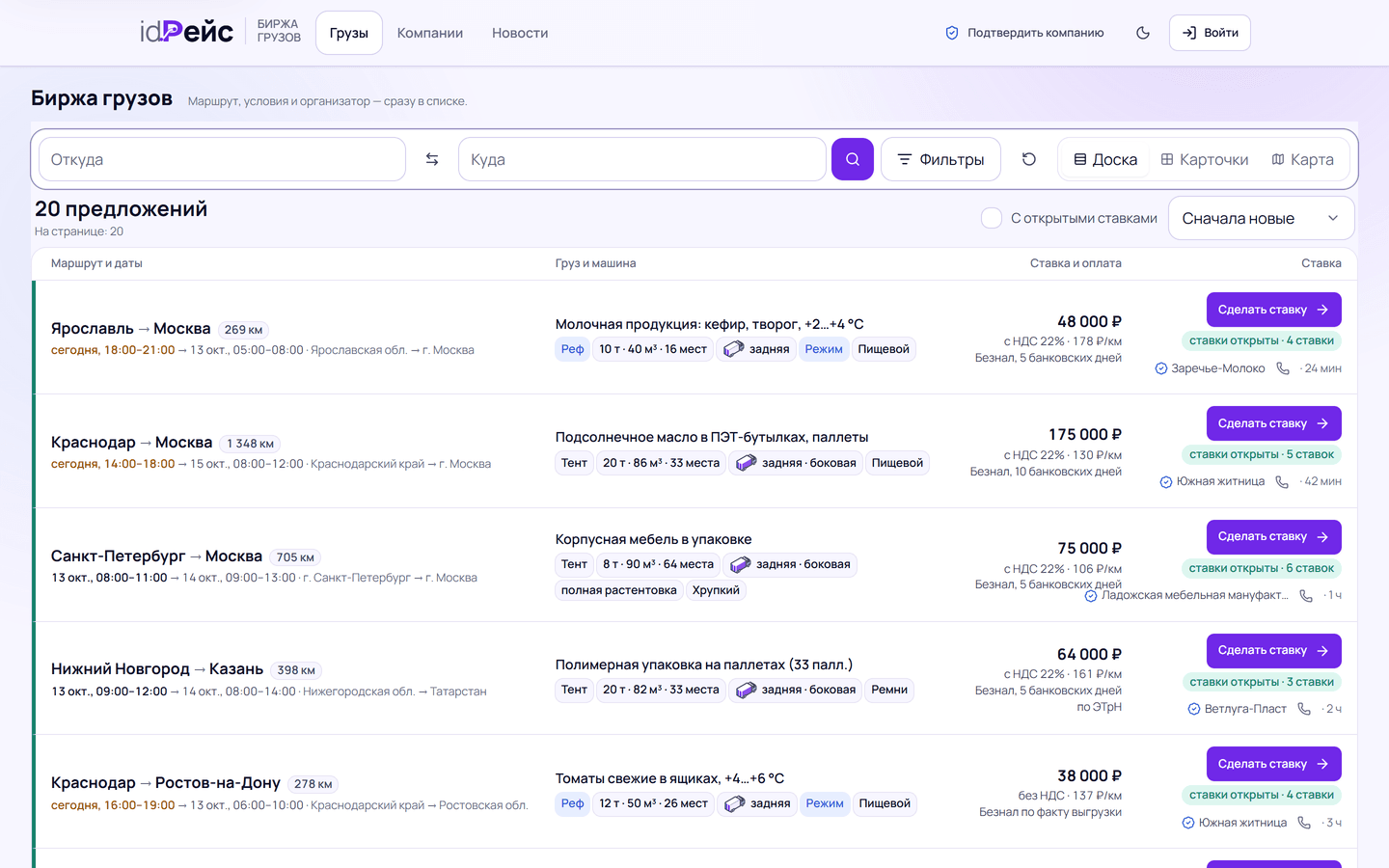
We open a company in Uzbekistan and become Skolkovo and IT Park residents. We launch id.Verify for the US market and start id.Reys.
Checks a carrier’s paperwork against the FMCSA federal record and shows where the two disagree — before the load moves.
Reads every page as an image, not as its text layer — so an amount typed over a certificate gets caught. Phone photos and scans welcome.
Identifies the carrier from the documents themselves, never from a number someone typed in.
Checks authority, insurance, safety rating and inspection history against FMCSA; the VIN against NHTSA; the legal name against the US Consolidated Screening List.
From the first conversation to a working system, in four stages.
01
Discovery
We learn the process and the systems in place, and talk to the people who will use the result. Goals and constraints are written down.
02
Design
We describe the solution and its interfaces, and estimate time and cost. The scope is agreed before development starts.
03
Build and launch
We deliver in parts and show progress along the way. Then we test, roll out and help the team get started.
04
Support and growth
After launch we look after the system, fix what comes up and add what the business needs next.
What’s your task?
Pick what brought you here — we’ll show how we handle it.
A system for your team
An internal system instead of spreadsheets and chats: orders, roles, task queues and reports in one place.
Usually this means
Orders, trips and clients
Role-based workspaces
Analytics, targets and performance
Integrations and APIs
We connect your system to marketplaces, registries and partner services, and design the API your clients connect through.
Usually this means
Importing orders from outside portals
Data exchange between systems
A public API with keys and webhooks
Documents and data
We extract data from scans, photos and messages, check it against outside sources and show where it disagrees.
Usually this means
Document recognition
Checks against registries and databases
Reports with a verifiable result
A website or Telegram app
Corporate websites and Mini Apps that work with your data instead of living apart from it.
Usually this means
A corporate website
A Telegram Mini App for clients or carriers
A link to your CRM or TMS
Our experts
Meet our experts
The people accountable for the result.
Scroll
Our experts · 01
CEO
Denis Taskin
“Our main asset is experience from running our own business. We’ve faced the same challenges as our clients, and we know which solutions actually work.”
Keeps logistics and IT in balance. Knows the industry from the inside — it all started at TK-IRSA.
“Every day is a reason to rethink the usual way of doing things. Standing still in technology isn’t an option — least of all in an industry as fast as logistics.”
In charge of architecture, and of systems that run calmly — Friday evening included.
How much does a project cost, and how do you estimate it?
Cost depends on scope, so we start with discovery: we learn the process and the systems in place, and pin down goals and scope. Then we give you time and cost — before development starts, not along the way.
How long does development take?
It depends on the task. We build in parts, so the first working piece arrives before the whole scope is done and you see progress along the way.
Do you work under NDA? Who owns the code?
Yes, we sign a non-disclosure agreement before you share the details. Code ownership and handover are set out in the contract.
What happens after launch?
We look after the system: we fix what comes up and add what your business needs next. That’s how we’ve been evolving our own TMS since 2022.
Can you improve our existing system instead of building a new one?
Yes. We start by learning how it works, then suggest what pays off best: improving it, connecting new services to it, or replacing one part of it.
Do you work with companies in other countries?
Yes. We have teams in Russia and Uzbekistan, and id.Verify serves the US market. Contract terms are agreed with the client’s country in mind.
Let’s talk
Tell us what you need — a product, an integration or a system built around your process. We’ll reply with a next step.